
Relief for Women Affected by Afghanistan’s September 2025 Earthquakes
Published: 25th of November 2025
DEVASTATING EARTHQUAKES IN NANGARHAR AND KUNAR, AFGHANISTAN
On 31st of August 2025, a 6.0-magnitude earthquake struck eastern Afghanistan, destroying more than 6,700 homes and killing at least 2,205 people, with many more likely still trapped under rubble. WFP Country Director for Afghanista, John Aylieff, and UN High Commissioner for Refugees, Filippo Grandi, warn that the disaster has intensified Afghanistan’s ongoing crises, including drought, forced returns from neighboring countries, and widespread malnutrition.
In Nangarhar, where WJO provides psychosocial services, schools and infrastructure have been destroyed, deepening existing vulnerabilities. The crisis is also expected to put women, girls and marginalized groups at increased risk of various types of violence (including sexual exploitation and abuse). Many survivors had severe injuries, some had even lost their hands or legs. Since most of the houses in the Kunar and Nangarhar villages were clay structures, almost all of their homes were destroyed.
ENGAGING WITH THE LOCAL COMMUNITY
The grave extent of devastation is palpable, and we recognise a pressing need for assistance, especially for at-risk groups. This includes women-headed households, disabled persons, pregnant, and breastfeeding women. Further, we note that casualties and death tolls in the Provisional Hospital of Nangarhar, where we have office, are alarming. All our psychosocial team started to provide on-the-bed counselling, with some conducting surgical assistance to victims due to the lack of governmental female doctors.
The clients that we selected were all families who had lost one or more, and in some cases all, of their family members. After their homes were destroyed, most of them have been living in tents, and a small number are staying with relatives.
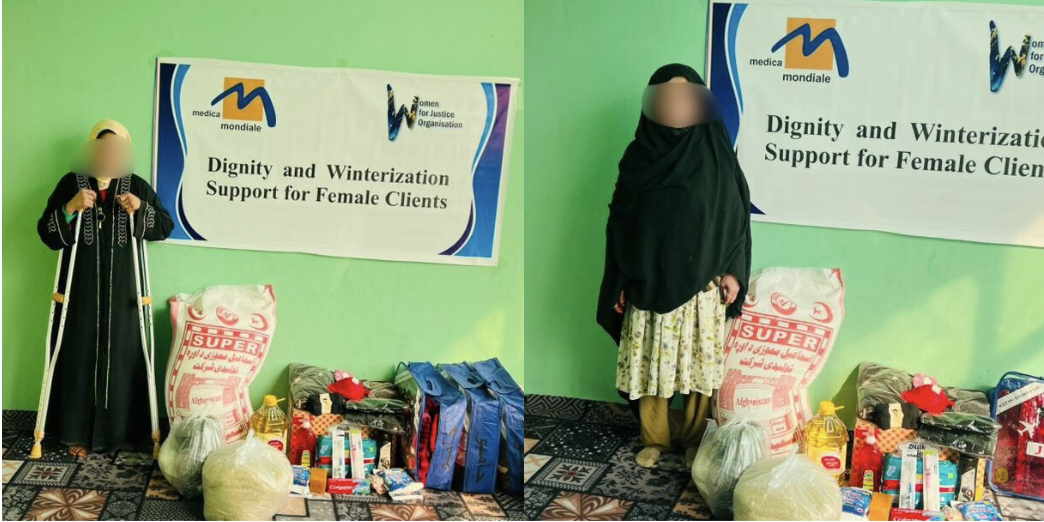
Clients receiving the provisions we offer.
We purchased essentials for women survivors: including flour, rice, beans, cooking oil, sugar, tea, warm blankets, hand-washing soap, clothes-washing soap, washing powder, dish-washing liquid, and warm clothes. These supplies would last each family for about one month. Along with providing essential supplies, we have a doctor on hand to assess injured clients and coordinate their transport to Nangarhar Regional Hospital via rescue teams.
In total, we supported 40 women.
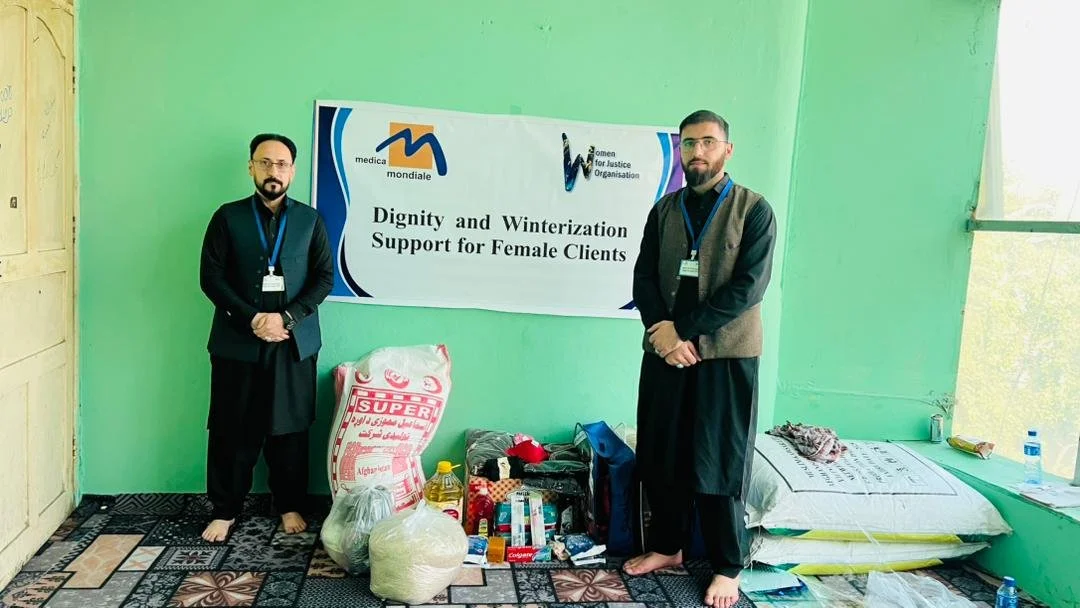
From Left to Right respectively: Fardeen and Jawid, WJO Team
“It was good to meet the clients today. Seeing their situation up close was difficult. They were really in bad condition after the earthquake. But I felt happy that at least we could help them with these small items, and they were genuinely thankful. It also helped me understand their needs better and reminded me why this work is important.” - Fardeen, WJO team.
“Because we were not familiar with the city of Jalalabad, we faced many difficulties and exhaustion in finding and purchasing items. We packed everything until 11 p.m., and woke up early in the morning. When we finally faced the beneficiaries, all our tiredness truly disappeared, because the people were extremely poor, suffering, and in need—so much so that one’s throat tightens and I myself felt like crying. There were young girls whose hands and feet were severely injured. All of them were deserving and deeply affected by the earthquake and the very difficult economic situation” - Jawid Noor, WJO team.
CALL TO ACTION
In times of devastation, timely assistance is vital for survival, safety, and recovery. As WJO continues providing psychosocial counseling to survivors, we are seeking support to supply essential relief items (such as food, clothing, and dignity kits) to our clients in Nangarhar.
